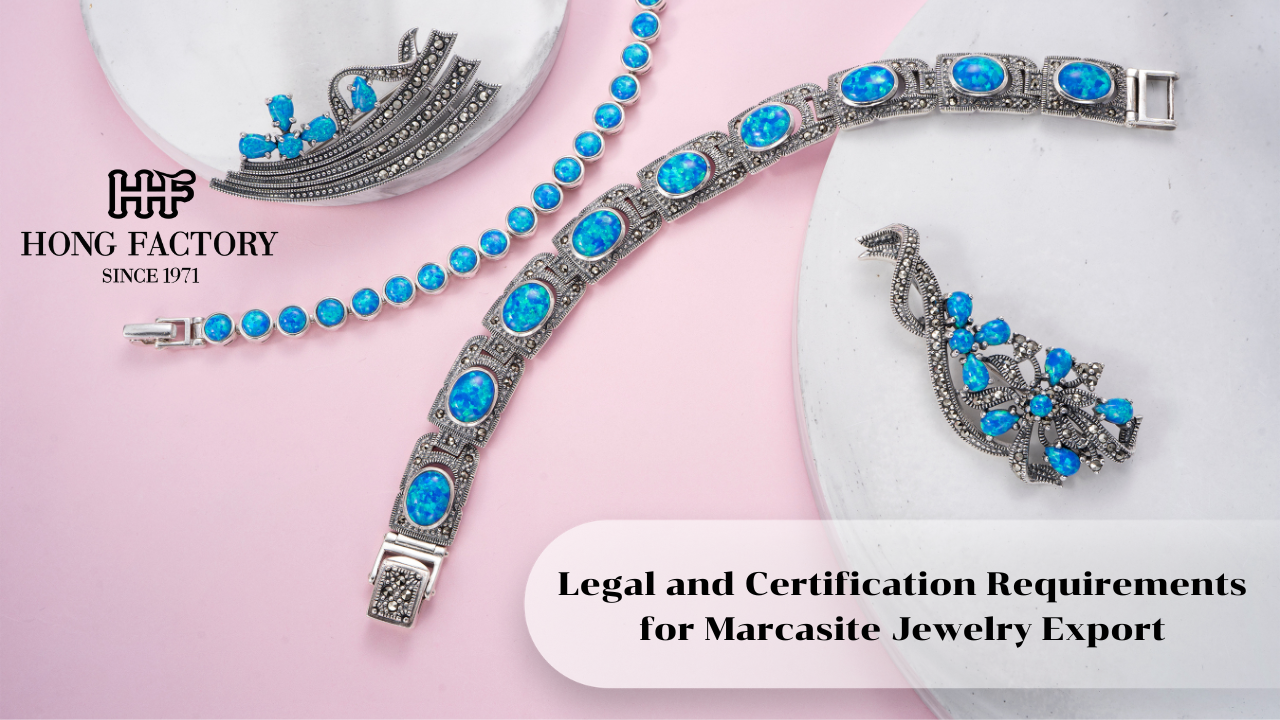
Exporting marcasite jewelry to international markets requires strict compliance with legal, regulatory, and certification standards. These requirements protect consumers, ensure fair trade, and maintain trust across global supply chains. For manufacturers, exporters, and brands, understanding legal and certification requirements for marcasite jewelry export is essential to avoid delays, penalties, or shipment rejection. 925
This article explains key legal obligations, certification standards, and best practices for compliant and successful international trade.
Why Legal Compliance Matters in Jewelry Export

Jewelry is a regulated product category.
Risks of Non-Compliance
- Shipment delays or seizure
- Financial penalties and fines
- Loss of distributor relationships
- Damage to brand reputation
Compliance is not optional—it is foundational to global business.
Product Classification and HS Codes
Correct classification ensures smooth customs processing.
Harmonized System (HS) Codes
Marcasite jewelry is typically classified under:
- Jewelry of precious metal (silver)
- Silver jewelry HS codes (vary by country)
Accurate HS codes determine applicable duties and taxes.
Metal Content Disclosure Requirements
Transparency protects consumers.
Sterling Silver Declaration
Most markets require disclosure of:
- Silver purity (925)
- Base metal confirmation
- Country of origin
Incorrect declarations can lead to penalties.
Hallmarking and Assay Requirements
Some regions mandate hallmarking.
Markets with Hallmarking Rules
- United Kingdom
- European Union (select countries)
- Middle Eastern markets
Hallmarks verify metal purity and authenticity.
Nickel and Allergen Compliance
Consumer safety regulations apply.
Nickel Regulations
- EU REACH regulations limit nickel release
- Jewelry must be tested for skin contact safety
Compliance prevents health-related recalls.
Product Safety and Consumer Protection Laws
Safety extends beyond materials.
Key Safety Considerations
- Secure stone settings
- No sharp edges
- Structural durability
Products must be safe for intended use.
Country-of-Origin Labeling
Origin transparency is required.
Labeling Requirements
- Country of manufacture
- Sometimes country of design
Mislabeling can result in customs rejection.
Certificates of Origin
Certificates support trade benefits.
Purpose of Certificates
- Verify manufacturing origin
- Qualify for trade agreements
- Reduce import duties in some markets
Proper documentation supports cost efficiency.
Testing and Certification for Export Markets
Testing validates compliance.
Common Tests
- Metal purity testing
- Nickel release testing
- Chemical content screening
Testing should be performed by accredited laboratories.
Packaging and Labeling Regulations
Packaging is regulated.
Required Packaging Information
- Material descriptions
- Care instructions
- Safety warnings (if applicable)
Clear labeling improves buyer confidence.
Environmental and Sustainability Regulations
Sustainability is increasingly regulated.
Emerging Requirements
- Environmental impact disclosures
- Responsible sourcing statements
Compliance strengthens brand positioning.
Intellectual Property and Design Protection

Protecting designs matters.
IP Considerations
- Trademark registration
- Design patents (where applicable)
- Anti-counterfeiting measures
IP protection supports long-term export success.
Export Licenses and Business Registration
Legal eligibility is required.
Exporter Requirements
- Valid business registration
- Export licenses (where applicable)
- Tax compliance
Documentation verifies legal authority to trade.
Customs Documentation Accuracy
Accuracy prevents delays.
Essential Documents
- Commercial invoice
- Packing list
- Export declaration
Errors can halt shipments.
Working with Customs Brokers and Consultants
Expert support reduces risk.
Broker Benefits
- Regulatory updates
- Documentation accuracy
- Faster customs clearance
Professional guidance saves time and cost.
Keeping Up with Regulatory Changes
Regulations evolve.
Best Practices
- Monitor target market regulations
- Maintain updated compliance records
- Schedule periodic audits
Proactive compliance avoids surprises.
Consequences of Ignoring Certification Requirements
Shortcuts are costly.
Potential Consequences
- Product recalls
- Market bans
- Legal disputes
Compliance protects growth.
Building a Compliance Checklist
Organization supports consistency.
Checklist Elements
- Material declarations
- Required certifications
- Testing reports
- Labeling verification
Checklists reduce human error.
Training Teams on Export Compliance
Education is essential.
Training Focus Areas
- Documentation standards
- Market-specific rules
- Quality and safety requirements
Informed teams reduce compliance risk.
Long-Term Benefits of Proper Certification
Compliance adds value.
Strategic Advantages
- Faster market entry
- Strong distributor confidence
- Reduced operational risk
Compliance becomes a competitive advantage.
Conclusion
Legal and certification requirements for marcasite jewelry export are complex but manageable with proper preparation and understanding. By ensuring accurate material disclosure, meeting hallmarking and safety standards, maintaining correct documentation, and staying informed of regulatory changes, exporters can navigate international markets confidently. Strong compliance not only prevents costly disruptions but also enhances brand credibility—allowing marcasite jewelry to succeed globally while upholding craftsmanship, safety, and trust.