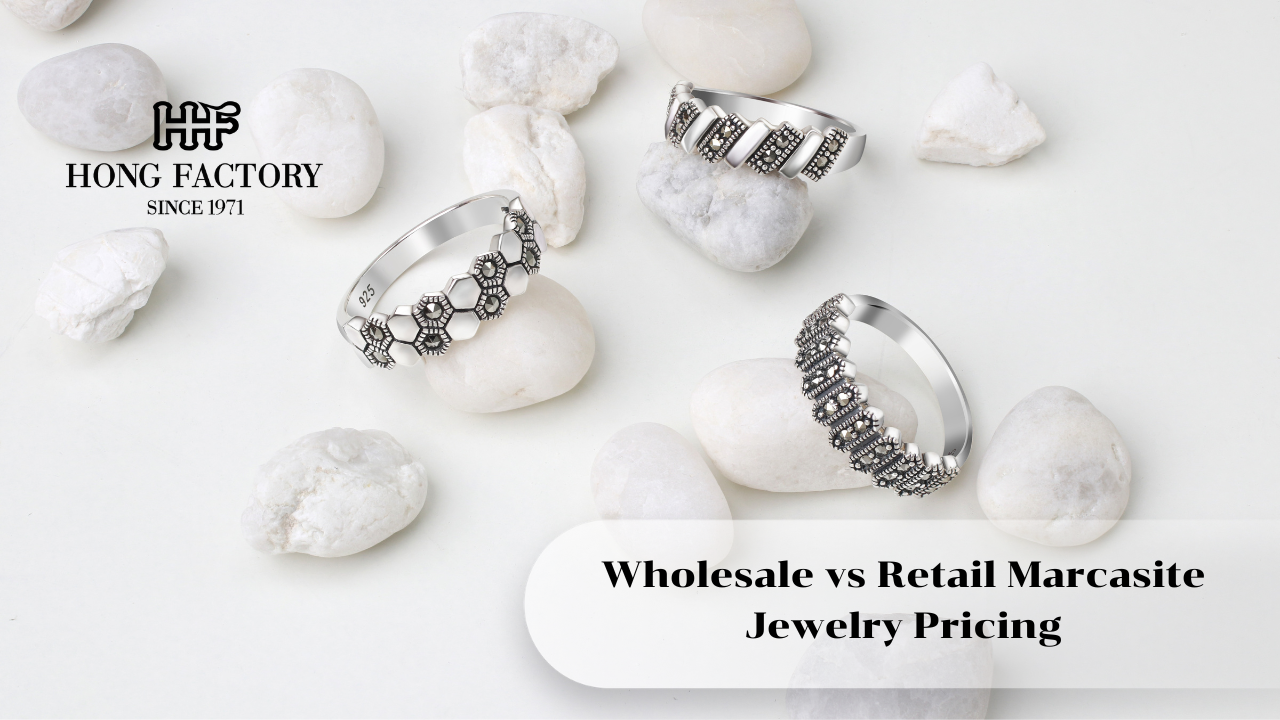
Understanding the difference between wholesale and retail pricing is essential for anyone involved in the marcasite jewelry market. Whether you are a manufacturer, wholesaler, retailer, or informed buyer, knowing how prices are structured helps explain cost differences, profit margins, and perceived value. Marcasite jewelry, with its labor-intensive craftsmanship and material considerations, follows clear pricing logic across wholesale and retail levels.
This article explains wholesale vs retail marcasite jewelry pricing, highlighting how costs are calculated, why prices differ, and what each level offers in terms of value. 925
What Is Wholesale Pricing in Marcasite Jewelry?
Wholesale pricing applies to bulk transactions.
Definition of Wholesale
Wholesale prices are offered to:
- Retailers
- Distributors
- Bulk buyers
These prices are lower per unit because products are purchased in volume.
What Is Retail Pricing in Marcasite Jewelry?
Retail pricing applies to individual consumers.
Definition of Retail
Retail prices reflect:
- Final consumer sales
- Brand presentation and service
- Store or online operating costs
Retail pricing includes additional value beyond production.
Key Cost Components in Wholesale Pricing
Wholesale pricing focuses on production fundamentals.
Main Wholesale Cost Elements
- Raw materials (sterling silver and pyrite)
- Labor and craftsmanship
- Quality control processes
- Basic packaging
Wholesale prices aim to cover costs while enabling resale profit.
Labor and Craftsmanship Impact on Wholesale Pricing
Marcasite jewelry is labor-intensive.
Why Labor Matters
Hand-setting stones and detailed silverwork require skilled artisans. This labor cost is embedded in wholesale pricing, even before retail markups.
Higher craftsmanship leads to higher wholesale prices.
Volume and Order Size Differences
Quantity affects price.
Wholesale Advantages
- Lower cost per piece
- Negotiated pricing tiers
- Consistent product supply
Larger orders generally receive better unit pricing.
Retail Pricing Adds Value Beyond the Product
Retail pricing reflects added services.
Retail Cost Factors
- Branding and marketing
- Store rent or e-commerce infrastructure
- Customer service and warranties
- Packaging and presentation
These elements justify higher retail prices.
Markup Differences Between Wholesale and Retail
Markup bridges the two levels.
Typical Markup Range
- Retail prices are often 2–3 times wholesale cost
- Premium brands may apply higher markups
Markup varies based on brand positioning and market demand.
Wholesale vs Retail Quality Expectations
Quality standards remain important.
Wholesale Quality Standards
- Consistent craftsmanship
- Secure hand-setting
- Reliable silver purity
Retail Quality Expectations
- Flawless appearance
- Attractive finishing
- Branded presentation
Retail customers expect perfection.
Pricing Transparency Across the Supply Chain
Transparency builds trust.
Why Transparency Matters
- Helps retailers explain pricing
- Builds buyer confidence
- Reduces price-based disputes
Clear communication benefits all parties.
Wholesale Pricing for Custom and OEM Orders
Customization changes pricing.
OEM and Custom Factors
- Design development costs
- Minimum order quantities
- Tooling and setup expenses
Custom wholesale orders are priced higher than standard collections.
Retail Pricing for Limited and Exclusive Designs

Exclusivity adds value.
Retail Premiums
- Limited-edition releases
- Designer collaborations
- Custom branding
Scarcity supports higher retail pricing.
Impact of Market Demand on Pricing Levels
Demand influences margins.
Market Conditions
- Rising interest in vintage styles
- Growth in sustainable fashion
- Increased appreciation for craftsmanship
Strong demand allows healthier margins at both levels.
Wholesale Pricing Risks and Considerations
Lower prices carry responsibility.
Wholesale Risks
- Overproduction
- Inventory management
- Quality consistency across batches
Careful planning protects profitability.
Retail Pricing Risks and Considerations
Retail pricing must balance value and perception.
Retail Risks
- Overpricing reduces competitiveness
- Underpricing damages brand value
- Inconsistent pricing confuses customers
Strategic pricing maintains trust.
Comparing Wholesale and Retail Value
Value depends on perspective.
For Retailers
Wholesale pricing offers margin potential.
For Consumers
Retail pricing includes service, assurance, and convenience.
Each level serves a different purpose.
Buyer Awareness: Why Prices Differ
Educated buyers understand pricing structures.
Buyer Benefits
- Realistic price expectations
- Appreciation of craftsmanship
- Confidence in purchasing decisions
Knowledge reduces price shock.
Long-Term Pricing Sustainability
Sustainable pricing supports the industry.
Balanced Pricing Strategy
- Fair wages for artisans
- Reasonable margins for retailers
- Honest value for consumers
Sustainable pricing ensures longevity.
Conclusion
Wholesale and retail marcasite jewelry pricing reflect different roles within the supply chain. Wholesale pricing focuses on production efficiency and volume, while retail pricing incorporates branding, service, and consumer experience. Understanding these differences helps manufacturers price responsibly, retailers maintain healthy margins, and buyers appreciate the true value behind marcasite jewelry. Ultimately, transparent and fair pricing supports a stronger, more sustainable marcasite jewelry market.