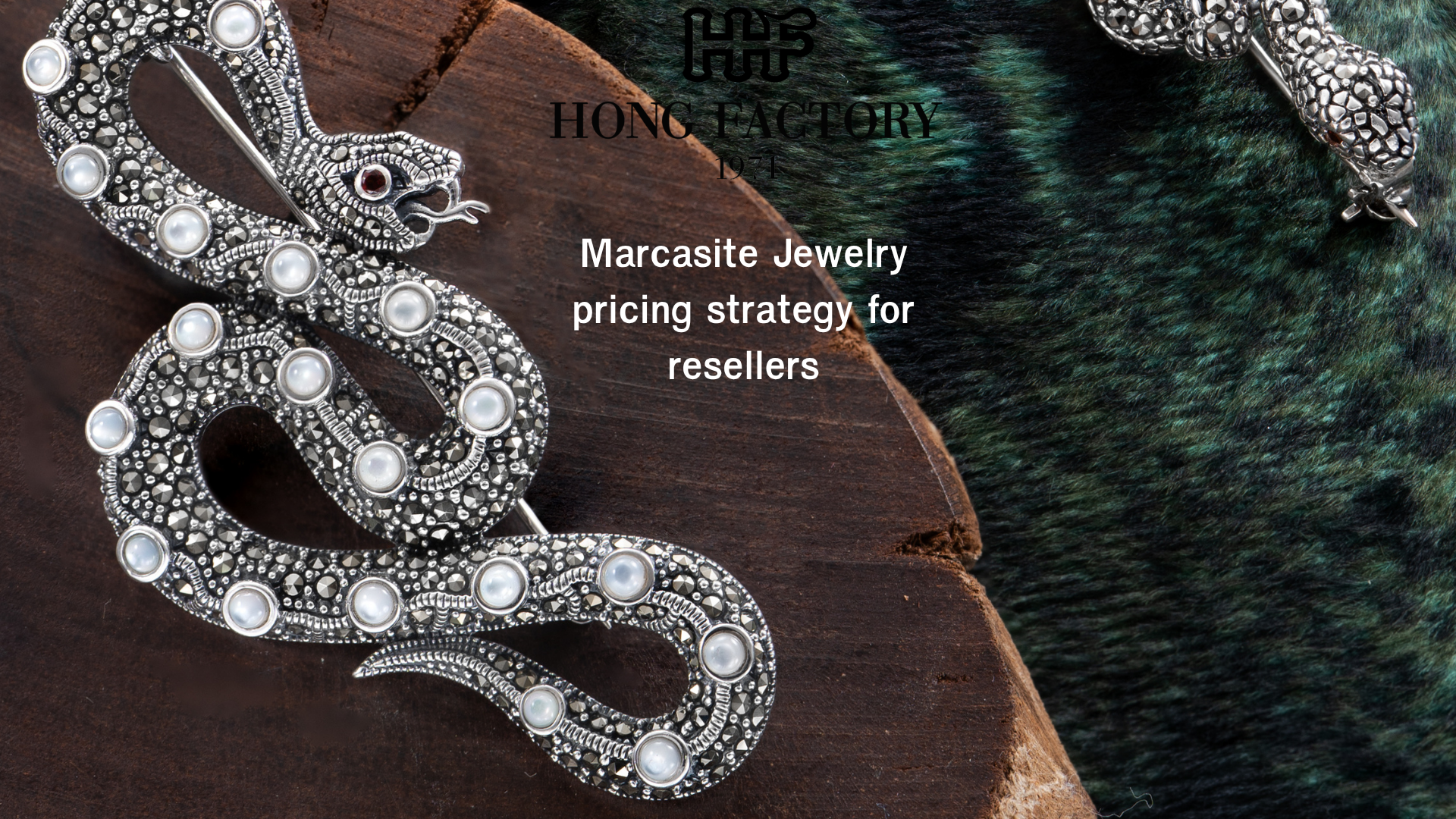
Marcasite Jewelry pricing strategy for resellers to maximize profit and competitiveness
Why pricing strategy is critical in jewelry resale

Pricing is one of the most important factors that determines success in a jewelry business. For resellers, setting the right price affects profit margins, customer perception, and competitiveness in the market. Marcasite jewelry, with its balance of affordability and premium appearance, offers excellent opportunities for strategic pricing.
A well-planned pricing strategy ensures that products are attractive to customers while still generating sustainable profits. From an SEO perspective, pricing-related content attracts business users who are actively planning or optimizing their operations.
Understanding cost structure before pricing
Before setting prices, resellers must understand their total cost structure. This includes product cost, shipping, import duties, packaging, marketing expenses, and platform fees.
Accurate cost calculation helps determine the minimum price needed to maintain profitability. Without this, businesses risk underpricing and losing money.
Keystone pricing strategy for simplicity
One of the most common pricing methods is keystone pricing, where the retail price is set at double the wholesale cost. For example, if a marcasite ring costs $10, it is sold for $20.
This method is simple and ensures a basic profit margin. However, it may need adjustment depending on competition and brand positioning.
Value-based pricing for higher margins
Value-based pricing focuses on perceived value rather than cost. Marcasite jewelry, with its vintage appeal and intricate design, can be positioned as affordable luxury.
By highlighting craftsmanship, design, and uniqueness, resellers can justify higher prices. This approach works well for branded products and niche markets.
Competitive pricing in crowded markets
In competitive markets, pricing must align with competitors. Researching similar products helps determine the acceptable price range.
However, competing only on price can reduce profit margins. It is important to balance competitiveness with brand value.
Psychological pricing techniques

Psychological pricing can influence customer behavior. Prices such as $19.99 instead of $20 create a perception of better value.
Other techniques include bundle pricing, discounts, and limited-time offers. These strategies can increase conversions and sales volume.
Tiered pricing for different product lines
Offering multiple price tiers allows resellers to target different customer segments. For example, basic designs can be priced lower, while premium collections can command higher prices.
This strategy increases market reach and maximizes revenue potential.
Pricing for online vs offline sales
Pricing strategies may vary between online and offline channels. Online stores often face higher competition and may require more competitive pricing.
Physical stores, on the other hand, can justify higher prices through customer experience and personalized service.
Wholesale vs retail pricing strategy
Resellers who operate both wholesale and retail channels must differentiate pricing. Wholesale prices are lower but rely on volume, while retail prices focus on higher margins.
Maintaining clear pricing structures prevents conflicts and ensures consistent business operations.
Discounts and promotional pricing
Promotions are effective for attracting customers and increasing sales. Seasonal discounts, bundle deals, and loyalty programs can boost engagement.
However, overuse of discounts can reduce perceived value. It is important to use promotions strategically.
Building brand value to support pricing
Strong branding allows businesses to charge higher prices. Factors such as packaging, storytelling, and customer experience contribute to perceived value.
Marcasite jewelry, with its vintage story and craftsmanship, is well suited for brand-driven pricing strategies.
Monitoring and adjusting pricing over time
Pricing is not static. Businesses should regularly review performance, competitor pricing, and market trends.
Adjusting prices based on data helps maintain competitiveness and profitability.
SEO strategy for pricing content
Keywords such as “jewelry pricing strategy” and “how to price jewelry” attract business-focused traffic. These users often have high intent and are looking for actionable advice.
Combining these keywords with “marcasite jewelry” creates a targeted niche for SEO.
Internal linking for business strategy topics
This article can be linked to wholesale guides, supplier selection, and marketing strategies. Internal linking strengthens the content network and improves SEO performance.
For example, pricing discussions can link to marketing articles, while cost analysis can connect to sourcing guides.
Content structure for better readability
Using H1, H2, and H3 headings improves readability and helps search engines understand the content. Well-structured articles perform better in rankings.
Breaking content into smaller sections also keeps readers engaged.
Expanding keyword variations naturally
In addition to the main keyword, related terms such as “retail pricing,” “profit margins,” and “jewelry business strategy” can be included naturally. This improves semantic SEO and increases visibility.
Conclusion

Marcasite jewelry pricing strategy is essential for resellers who want to maximize profit and remain competitive. By understanding costs, applying effective pricing methods, and building strong brand value, businesses can achieve sustainable growth.
For SEO and PBN strategies, pricing content attracts high-value users and supports long-term success. With clear structure and practical insights, this type of content can drive both traffic and conversions.